Plickers - 9
Key:
Green - Improvements
Red - Peer Assessment
Pink - Teacher Assessment
What is a Game Genre?
A video game genre is defined by a set of gameplay challenges and are classified independent of their setting or game-world content, unlike other works of fiction such as films or books. For example, a shooter game is still a shooter game, regardless of whether it takes place in a fantasy world or in outer space. Games are given PEGI relating to their content, for example, a first person shooter which features gore would be rated highly from anywhere between PEGI 15 to PEGI 18. Whereas, a game that features races and activities and is styled in a cartoonish way would be rated quite low because the game would most likely not have anything that will disturb the players experience. A game genre is important because it allows people to easily identify games that are also in that genre that they will most likely will enjoy as well.
Rocket League – A sports-driving game that is PEGI rated as 3 because it does not feature any horrific images or something that doesn’t scare a young child if they spectated an older friend playing the game. The player drives around an arena trying to push the large ball into the goal, the player can pick up boosts in the arena which allows them to travel to the ball faster to save it or to hit the ball harder towards the oppositions goal.
| Game | Genre | Reason to be in genre |
|
Elder Scrolls V: Skyrim |
Open World, RPG, Fantasy | In Skyrim you play as a custom character with a set campaign and an open world to adventure across the land in discovering small hidden areas that may have treasures or monsters or hidden easter eggs the developers (Bethesda Game Studios) have left for the players to find. |
|
Super Mario Bros. |
Platformer | In Mario, you play as a plumber and the camera follows your character directly so that the player can keep track of his character. |
|
Rogue Legacy |
RPG, Fantasy, Platformer, Dungeon | In Rogue Legacy, you play as a knight, who has multiple different classes, and he travels through a multiple different dungeons beating 4 mini-bosses and after your have beaten all of them you fight the final boss. |
| Battlefield 1 | FPS | In Battlefield 1, you can play through the campaign through 6 different perspectives such as the playing as a Bedouin warrior set in Mesopotamia, in Iraq. In multiplayer you can play as multiple different classes and play towards multiple objectives such as war pigeons, flags and bombs. |
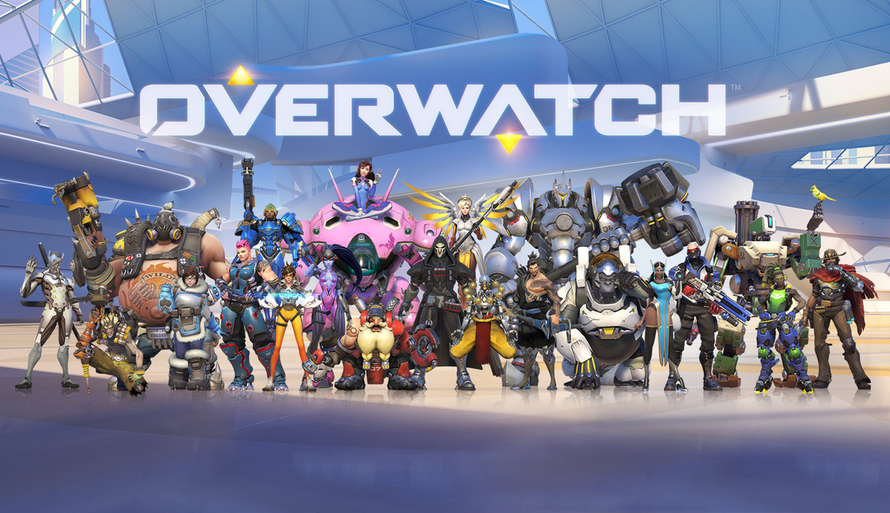
'Overwatch' – FPS – PEGI 12:
Overwatch is a first person shooter than features cartoon like art style, some blood such as a small splat that instantly disappears but no gore. Released 24 May 2016. Uses strategy as well to ensure that the teams have the highest chance of winning. Certain characters are given abilities that allow them to traverse the environment whereas others are fitted with shields and barriers which stop incoming damage and some others have the ability to heal either themselves or some heal the entire team and allow the team to move towards the objectives with fewer casualties. Few interactive aspects.
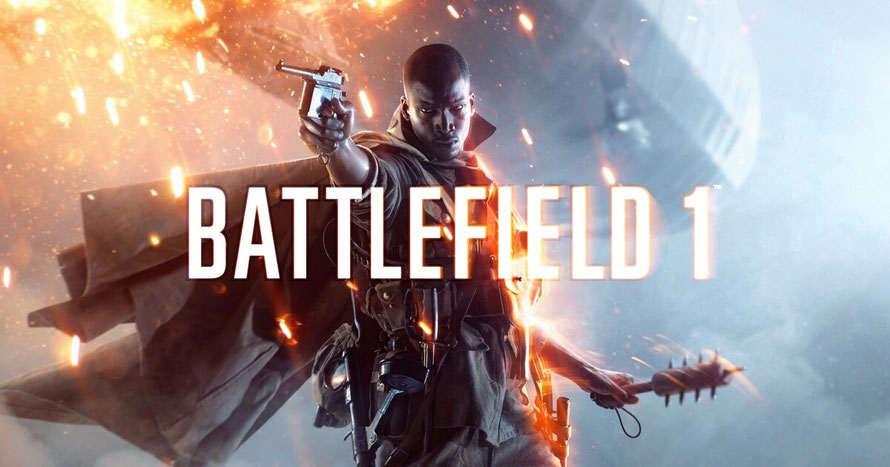
Battlefield One – FPS – PEGI 18:
Battlefield One is a first person shooter which utilises hyper-realistic art style to make the player feel more immersed into the action. This game features a large amount of blood and gore, along with many disturbing images such as people getting burnt to a crisp by a player wielding the flamethrower or people getting bludgeoned by a bludgeon. This game was released on the 21st of October 2016 and utilises strategy for your team to capture objectives and gain vision over hiding enemies. This game can be played solo because it features a fully immersive and dynamic campaign with multiple places over the world and the opposing factions.
Comparison:
Battlefield One and Overwatch both fall under the first person shooter genre, but they both have different target audiences and PEGI ratings. Battlefield One uses hyperrealism to draw the player in and is rated PEGI 18. This is because of its many unique and dynamic features, such as charging at people with bayonets or flying over a fortress and unleashing small explosives that wipe out the enemy infantry who are trying to fortify the area. This game features blood and gore which many people hate the sight of and nearly gag or throw up and is one of the reasons why it is rated at the highest PEGI rating possible. It also features mild language which the games industry does not want small children hearing and repeating at school which is another reason why this game is rated 18. On the other hand, Overwatch is also a first person shooter but it is only rated a 12 by PEGI. Overwatch incorporates strategy into their game which appeals to an older audience because it involves a sense of teamwork and team building with people you have never spoken to or with friends. Overwatch uses cel-shading to create this cartoon-like yet close to hyper-realistic gameplay. When you hit an enemy with a projectile they you can see that they release a small spray of blood but this instantly evaporates to keep this clean battlefield. Also, Overwatch features a character who’s catchphrase is multiply repeating ‘DIE’ which many parents do not want their child to hear or repeat.
Game Genre Features
First Person Shooter -
- Competition against real or artificial intelligence opponent.
- Most of the weapons are based off real weapons but sometimes if the game is set in the future they weapons could be completely imaginative.
- The player views from their character's perspective.
Sports -
- Competition against real or artificial intelligence opponent.
- Performance challenges
- Based on a real or fantasy competitive sport
Driving -
- Competition against real or artificial intelligence opponent.
- Either in the first-person or third-person perspective.
- The player partakes in a racing competition with any type of land, air, or sea vehicles. They may be based on anything from real-world racing leagues to entirely fantastical settings
MMO (Massively Multiplayer Online) -
- Competition against real opponents in the same instance.
- Open World
RPG -
- Competition against real or artificial intelligence opponent.
- Game can be single player or multiplayer such as the Elder Scrolls V: Skyrim and The Elder Scrolls Online.
- Controls a preset/person made character who follows a set story line.
Action -
- Competition against real or artificial intelligence opponent.
- Physical challenges such as hand–eye coordination.
- The player typically controls the protagonist or avatar. The avatar must navigate a level, collecting objects, avoiding obstacles, and battling enemies with various attacks
Strategy -
- Competition against real or artificial intelligence opponent.
- Skillful thinking and planning to achieve victory.
- They are generally categorised into four sub-types, depending on whether the game is turn-based or real-time, and whether the game focuses on strategy or tactics.
- A player must plan a series of actions against one or more opponents, and the reduction of enemy forces is usually a goal.
Simulation -
- Competition against real or artificial intelligence opponent.
- Attempts to copy various activities from real life in the form of a game for various purposes such as training, analysis, or prediction.
- Usually there are no strictly defined goals in the game, with players instead allowed to freely control a character. Well-known examples are war games, business games, and role play simulation.
Adventure -
- Competition against real or artificial intelligence opponent.
- Player assumes the role of protagonist in an interactive story driven by exploration and puzzle-solving.
- Focuses on story allows it to draw heavily from other narrative-based media, literature and film, encompassing a wide variety of literary genres.
Game Comparison
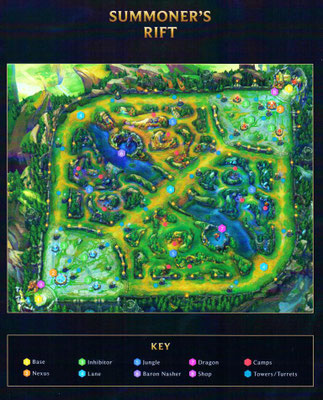
League of Legends (Map on left) -
'League of Legends, Riot Games, 27 October 2009' is a MOBA (Multiplayer Online Battle Arena) where 5 players are pitted against an opposing team of 5 summoners or 5 AI (artificial intelligence) to destroy the opposing team's core. As you can see the map is divided by 3 lanes, Top, Middle and Bot. Each player chooses or is given a role by the game and this correlates to each lane. There is a marksman and a support in the bottom lane, One person mid who normally plays either an assassin or a mage and one person who normally a warrior in the top lane. You may be wondering where the other person is because there are only 3 lanes and 4 people have already been given. The 5th player is the jungler who goes around the map taking jungle buffs and assisting teammates to help them win their lane and get ahead of the opposing laners. One of the most important roles in the game is support because you have to be able to protect your allies and be able to apply crowd control which allows your team to kill the enemy and win the game. The map is 160m each way and each champion walks about 3.5m seconds which makes the map seem small but in reality the map is huge. From the image of the map, I can see that the colours are bright and radiate a triumphant aura which suggests that only the best "Champions" are selected and put into this arena which towers above the rest of the areas.
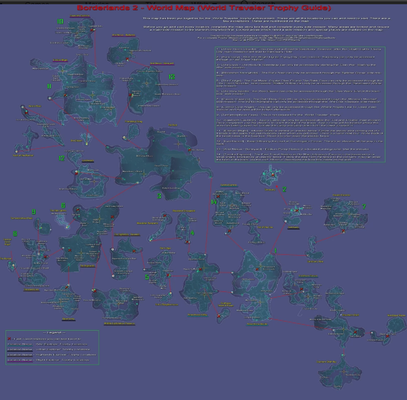
Borderlands 2 (Map on the right) -
'Borderlands 2, 18 September 2012, 2K Games/Gearbox Software' is a first person action role-playing game. As you can see from the image above, this is the entire playable areas of Borderlands 2. It may seem small but these maps are so expansive that it takes players a huge amount of time to explore each area, also from the image you can see that the image has been shrunk down a huge amount which further shows how expansive the entire borderlands 2 map is. In each area, Gearbox Software has placed little easter eggs for the players to find and enjoy, one of the most notorious easter eggs in the game is the 'Minecraft, 7 October 2011, Mojang' easter egg. In this easter egg there is a small hidden area in the Caustic Caverns where you can kill Creepers and have a chance for the big creeper to drop a legendary weapon which fire Minecraft arrows.
4 Game Mechanics (Rocket League) -
Cars - In "Rocket League, 7 July 2015, Psyonix" you can choose a car and customize it. There are 27 cars which you can customize which includes the colour, the wheels, boosts and things that go on top of the cars. Many people choose their cars from 4 statistics that can affect the car's performance in the game:
Hitbox - Some cars are wider, some are taller, some are longer. Some cars use the same hitbox, but some are wildly different. For example, the Octane is a quite a tall car, while the breakout is incredibly flat. However, some car's hitboxes do not match with their visual model which is a significant factor which people choose before choosing their car.
Elevation - Related to hitbox; basically this describes how far the car sits from the ground. The height of a car's hitbox plus its elevation gives you its "true" height when on the ground.
Pivot Offset - Basically the car's "center of mass". Rocket League physics are weird, and the location of a car's center of mass can significantly change how dribbles, flicks, and even basic shots can feel.
Turning Radius - How fast the car can change direction on the ground. This one is the hardest to measure since it is not itself a stat, but rather is a consequence of the physics engine, but some cars can turn faster/slower and tighter/wider than others under different conditions. (i.e. if you're boosting, powersliding, how fast you're going, if you're going forward or back, etc.... all of these have different turning speeds for different cars. Some are faster in some areas than others.)
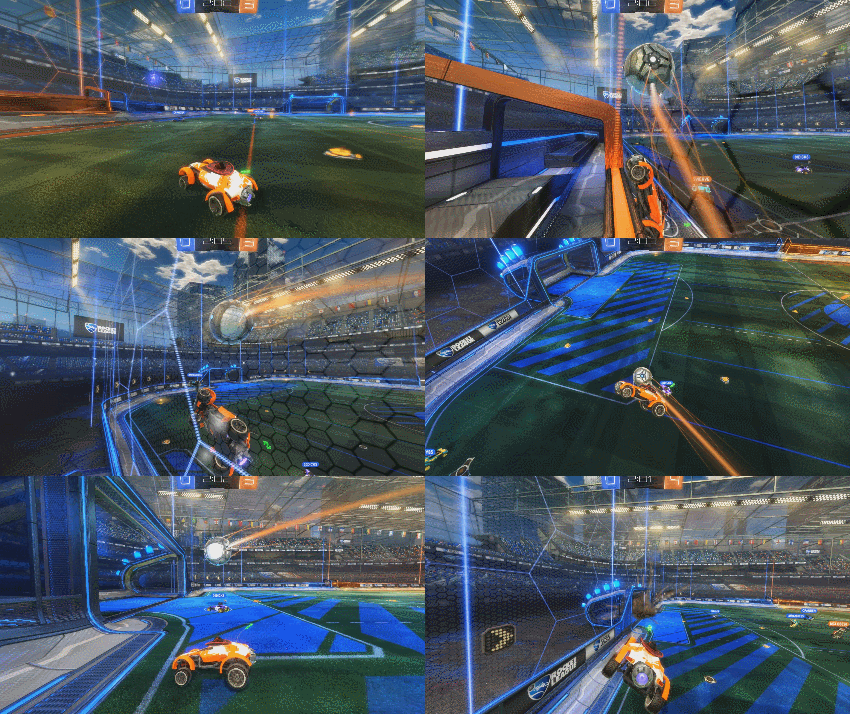
Boost - Boost is a game mechanic that allows players to increase their speed when moving forward or enables them to fly for a short amount of time, which enables the player to perform tricks in the air called freestyling. Boost can also be used as a braking assist or to change momentum. Boost only accelerates in the direction the car is facing, so achieving Mach speed while driving in reverse is only possible through collisions or dodging.
The HUD features a special gauge representing the boost-meter. Using the boost will deplenish the meter. It can be filled again by picking up special boost-pickups. There are two kinds of pickups: 12% refills and 100% refills. The larger boost which entirely refill your boost are located at the edges of the arena, while the smaller ones are placed more inward. Picking up a 100% boost will consume the node and bring the boost meter to 100% regardless of the prior level of boost. Nodes will not be consumed if the boost meter is already at 100%. The small 12% nodes refresh on a ~5 second cooldown, and the 100% orb nodes refresh on a ~10 second cooldown.
Points - Rocket League awards player when they completed small tasks in the game, such as saving a goal or clearing the ball away from the team's defending end. Each player has an equal chance to gain points throughout a game, commonly the player who attacks the opposing goal often gets more points. At the end of the match, the player on the winning team with the most points gets MVP (Most Valuable Player) and is awarded an additional 100 points. If two players on the winning team have the same number of points when the match ends, MVP is awarded to the first of the tying players in alphabetical order based on the player names. Points per game will vary greatly based on player skill levels and the matchup, but points typically range between 100 and 1000 per game, not including the match completion point.
Bots - Bots are AI-controlled non-player characters that can assist or oppose the player in a match. Their skill level is based on their difficulty setting, but they remain in the "Rookie" rank as bots cannot level up. A player can play a game with just bots like if they were playing offline, or bots can fill in spots of dropped players in online matchmaking (this excludes competitive matchmaking). Each bot is named specially and have references to films and tv shows, for example when playing in season mode, the team Rovers consist of up to 4 members which include, "Buzz, Armstrong, Shepard, Yuri". Each of these characters are named after famous astronauts, Edwin "Buzz" Aldrin, Neil Armstrong, Alan Shepard, Yuri Gagarin.
Key Gameplay Design Elements
- Core gameplay mechanics, E.G. Jump height
- Goals, challenges and rewards
- Progression
- Balance and flow
- Fair and unfair player punishment
- Secrets and easter eggs
- Replay value
- Target audience, key demographics
Brief Game Synopsis
- Genre - Platformer
- Takes place in 1800's Japan.
- The Overlord has ravaged your town and everyone has gone missing, you have to adventure through the levels in order to save your family and village members.
- Game is viewed from a side-scrolling point of view and follows the character closely.
- The current map design is the starting level.
Level Design
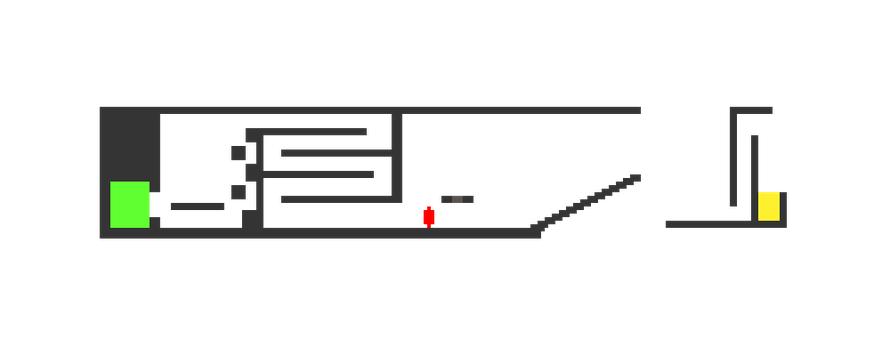
This is what my level will most likely look like because it is simplistic, yet gets the player to test the game mechanics such as the wall climbing ability and double jumping to clear the first small area. The green zone represents where the player starts, this is their safe zone. The red shape indicates that there will be an enemy present who you have to either jump over or eliminate. The yellow zone represents the finish area, as soon as you touch the area after a second or two it will present you with the victory screen.
Basic Flow Chart
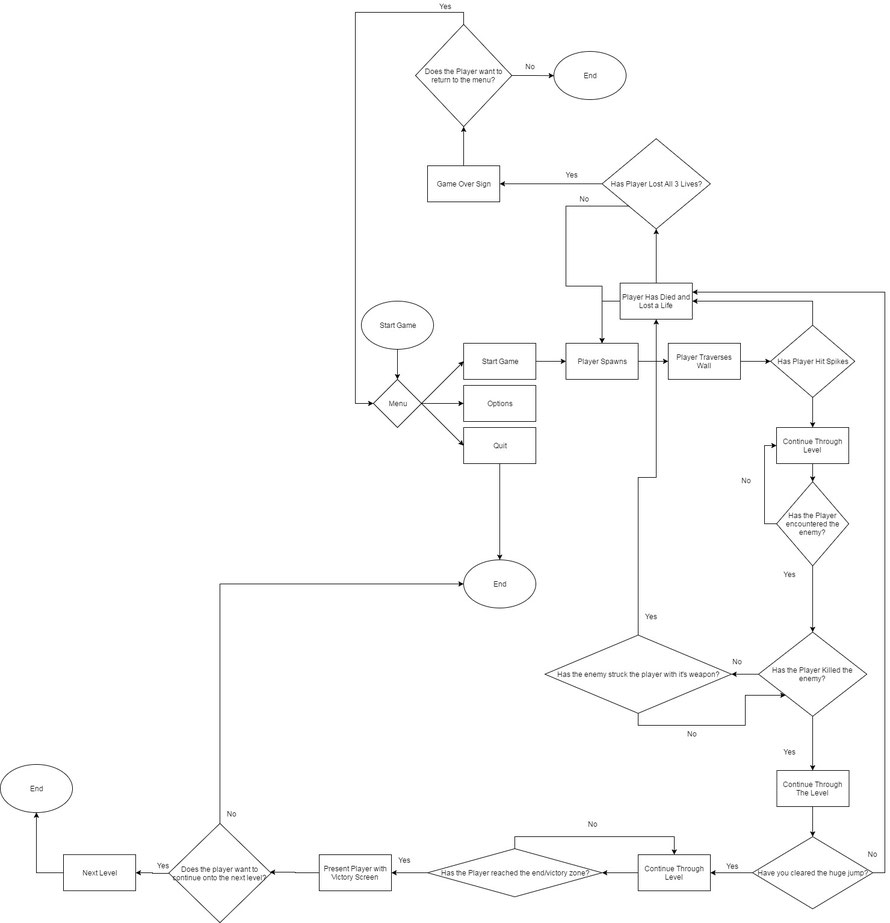
This is a Basic Flowchart of how a level in my video game will be carried out. There are different symbols which all represent a different meaning. The rectangle shows a process after a decision had been made by the player. The polygon is a decision that the player has to make during the progression of the level or game. Arrows will indicate where the result of an input or output has been lead too. This flowchart covers almost all variables within my game such as number of lives, enemy actions and player interactions with objects.
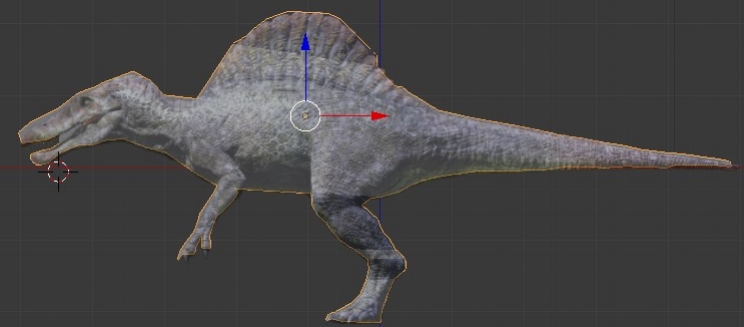
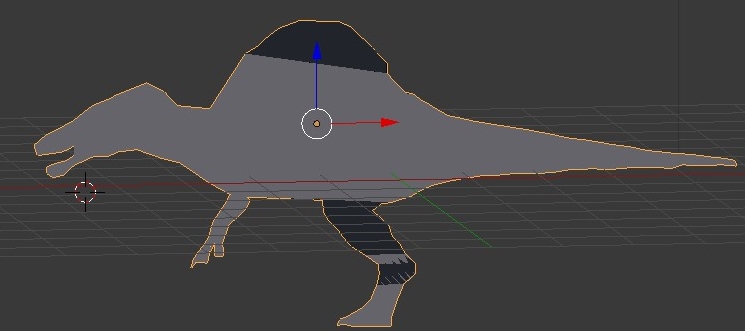
As you can see I have experimented using Blender to create 3D objects that could be used in my game. I have created a Spinosaurus from an image mask which has allowed me to go around the body. This could be used in my game as a mini-boss or large boss but not the final boss.
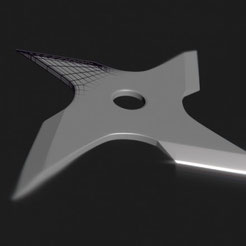
This is an image of a 3d modelled shuriken which was created by the user "RadialRonnie". This item/object will be the player's main ranged attack. The player will not be able to continuously use these shurikens to ensure a decent amount of game balance. They may require a cooldown timer or an ammo display.
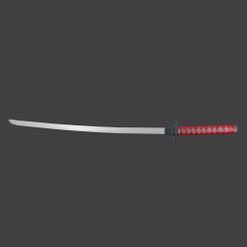
"Mahesh" has created this 3D model of a traditional Japanese Katana which is commonly used by Ninjas, Samurai and Shoguns. This is going to be the primary weapon that the character will be able to pick up and use to vanquish enemies. I may put a use limit on the weapon due to it's long reach or I may put a time limit on the use of it to make the game balanced.